
Summer Weather Tips
Rising temperatures mean special considerations for cat care.
Community cats are highly savvy and adapted to outdoor living. They instinctively know how to find cool, shaded areas to wait out high temperatures. However, caregivers can still step in to provide support—especially in extreme weather. PLEASE NOTE: If you witness any signs of heat exhaustion or heatstroke, contact a veterinarian immediately. Find information on symptoms below.
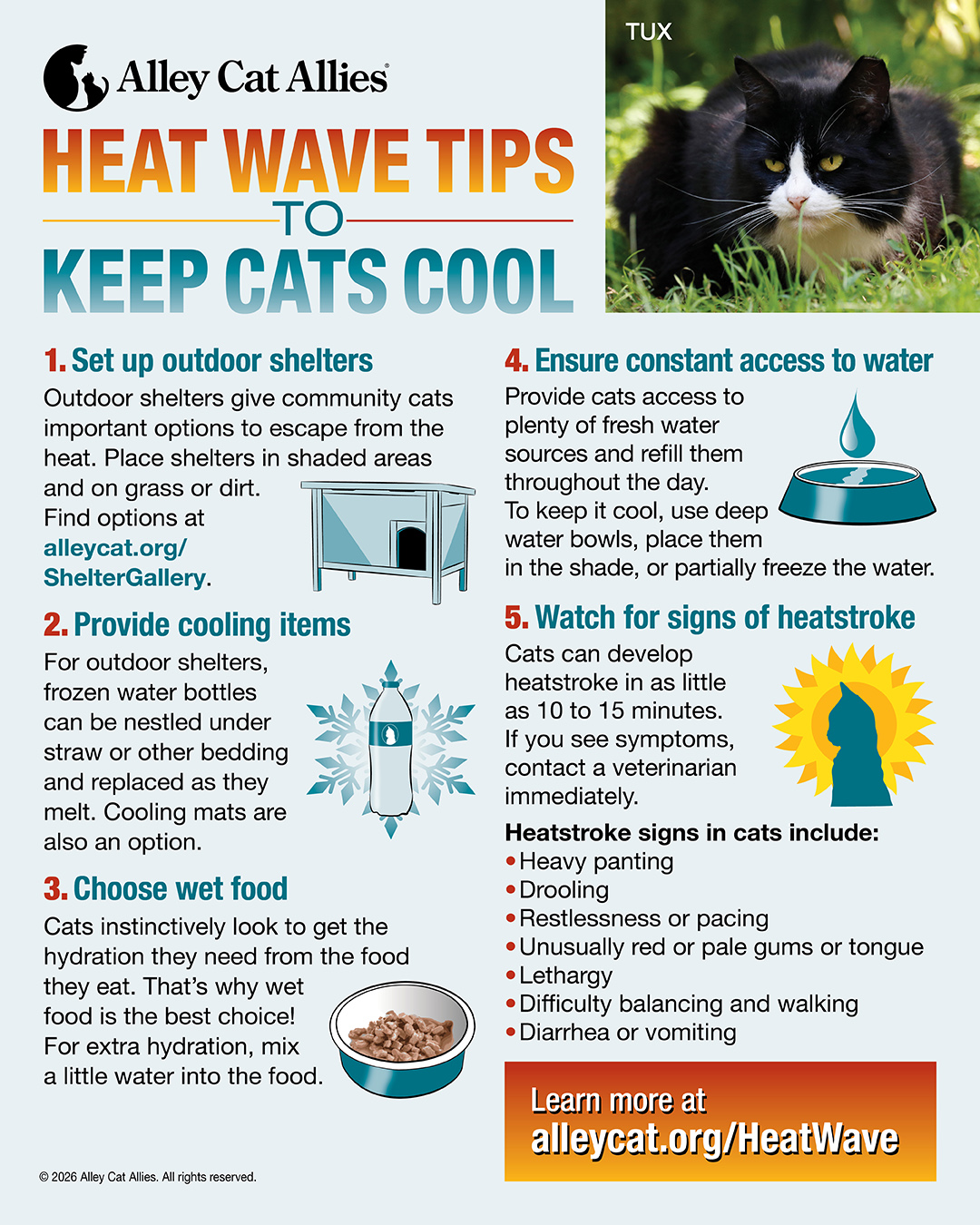
Here are some tips to keep your feline friend well-fed and hydrated during warmer months.
Food Tips
Cats have a low “thirst drive” because they instinctively look to get the moisture they need from the food they eat. That’s why wet food is always the best option for cats over dry food!
- To help cats stay even more hydrated, you can mix a little water into the wet food. Take care not to thin it out too much, or cats may not eat it.
- Identify the best location to provide food (and water). Ensure food and water stations are separated from litter boxes or areas where cats are known to use the bathroom. Make sure they are also in low-traffic areas, and in locations that get little to no direct sunlight.
- Add some flavor. You can include a small amount of low-sodium, cat-friendly broth (tuna, chicken, etc.) to the food source. IMPORTANT: Be sure the broth does not have any alliums, like onions, garlic, and leeks. These are dangerous for cats. Cat-friendly broth can be purchased at pet stores or made at home to ensure it contains no harmful ingredients.
- Don’t leave food out for too long. After about 30 minutes, bugs will start to show up. Picking up uneaten food after roughly 45 minutes helps prevent that.
- Invest in an ant-proof bowl. Or, you can create your own “ant barrier” by surrounding the bowl with a “moat” of water by placing the food dish within a pan of water. Or, create a line of food-grade diatomaceous earth without chemical additives.
Water Tips
During the hottest months, give cats several options to stay hydrated. Even while feeding cats wet food, make sure they also have access to clean, cool water. Provide plenty of fresh water sources and top them off throughout the day. Too much water access is better than not enough!
- Place water bowls in shaded areas. Feeding stations keep water out of the sun, and they’re easy to build!
- Use a bowl that is narrow but deep. This reduces the bowl’s surface area and slows evaporation.
- Though the above is the best for keeping water cool and available, try offering dishes of various sizes and types to see which one cats are most attracted to. What matters most is what gets them to stay hydrated!
- Make sure cats’ water bowls are elevated and resistant to tipping over in the wind.
- Drop a few ice cubes into the water bowl (if the kitty doesn’t mind ice). Or, fully or partially freeze the water in a freezer-safe bowl before setting it out.
- Pet water fountains provide a constant stream of water, inspiring cats to drink even more.
Shelter Tips
Outdoor shelters give community cats important options to escape from the heat. Alley Cat Allies has examples of options for inexpensive outdoor shelters to purchase and easy DIY outdoor shelters for cats in our shelter gallery.
- Be sure to only place cat shelters in shaded areas and on grass or dirt (concrete holds heat). If possible, elevating the shelter onto wooden planks or bricks will help keep air circulating.
- The ideal summer outdoor shelter will also have two openings for air to escape, so hot air can cycle through it.
- If cats are sheltering in shaded places, like under a deck, provide water in those spaces and be sure entrances and exits are not blocked.
More Cooling Techniques
- For outdoor shelters, frozen water bottles can be nestled under straw or other bedding and replaced as they melt.
- For cats indoors, use the same technique or consider providing cooling mats. Place these under thin sheets or other bedding as well, as some cats don’t enjoy the sensation of the bare cooling mats under their paws.
- Ensure blinds and curtains on your windows are closed during sunlight hours. Use blackout curtains and/or UV-blocking sheets or films on your windows to block out the heat of the sun and save energy.
- Keep the door closed. Try to minimize the number of times you open doors and windows in peak daylight hours to prevent letting cool air out of the home.
- Turn off electronics when not in use. Additionally, avoid running appliances like laundry machines, dryers, or ovens, which can pump heat into the home.
Watch for Signs of Heatstroke
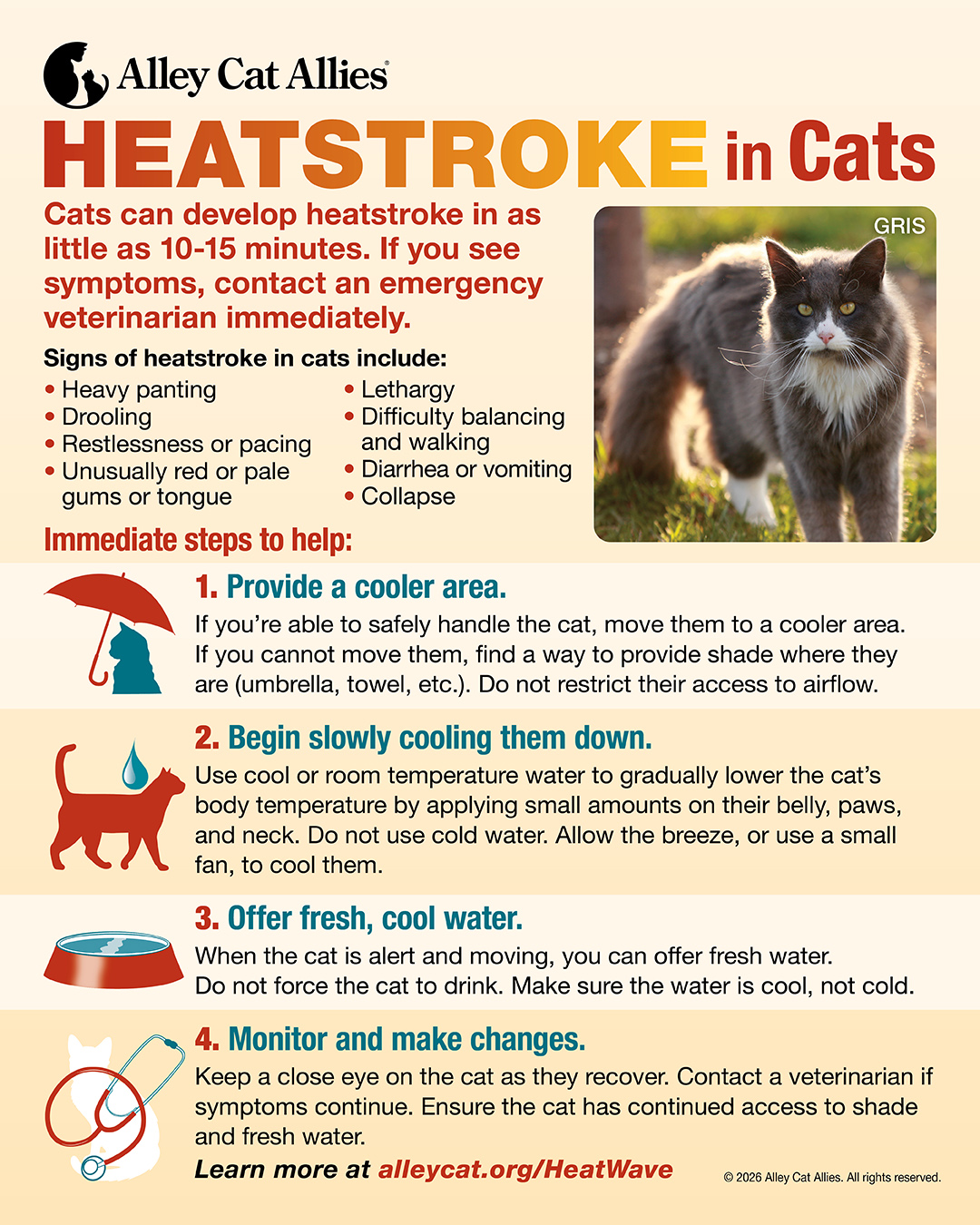
In extreme temperatures, cats can develop heatstroke in as little as 10 to 15 minutes. This is a serious medical emergency that requires urgent treatment. If you see signs of heat exhaustion in cats, contact a veterinarian immediately or bring the cat to an emergency animal hospital.
Heatstroke symptoms in cats include:
- Heavy panting
- Drooling
- Restlessness or pacing
- Unusually red or pale gums or tongue
- Lethargy
- Difficulty balancing and walking
- Diarrhea or vomiting
- Muscle weakness and shaking
- Collapse
Immediate steps to address heat exhaustion:
- Provide a cooler area.
- If you’re able to safely handle the cat, move them to a cooler area. If you cannot move them, find a way to provide shade where they are. You could use an umbrella, bring a carrier to them, or hold up another object to block the sun. Do not restrict their access to natural airflow.
- Begin slowly cooling the cat down.
- Use cool or room temperature water to gradually lower the cat’s body temperature. Do not use cold water, as this can cause shock and may result in further complications.
- You can use damp towels to brush along their belly, paws, and neck or slowly dump small amounts of water on these areas from a bottle or cup. Allow the breeze, or a small fan, to do the work through evaporative cooling.
- Offer fresh, cool water.
- When the cat is alert and moving, you can offer fresh water. Do not force the cat to drink. Make sure the water is cool, not cold.
- Ensure the cat has access to shade and cooling items.
- To avoid a relapse, follow the best practices in this resource to keep cats cool.
Trap-Neuter-Return (TNR) Considerations
If you perform Trap-Neuter-Return (TNR) during the summer, take the extreme heat into account.
- If extreme heat is forecast, avoid doing TNR. If it is too hot for you to be safely outdoors, it is too hot for trapping.
- Once the cat is trapped, move her IMMEDIATELY to a cool, air-conditioned, temperature-controlled space.
- NEVER leave cats in a hot car while trapping. Cats can get heatstroke in a matter of minutes, and it is fatal.
- Don’t place traps on surfaces that get extremely hot from the sun, such as asphalt. The metal can absorb the heat and burn the cat’s paws.
- Keep the future forecast in mind. It may be a usual summer day when you trap, but an extreme heat wave could start the following day, when the cat is due to be returned. To avoid keeping cats in traps for days on end, which is cruel and stressful for them, reschedule your trapping if extreme weather events are forecast.