
Keep Cats Comfortable in the Winter and Summer
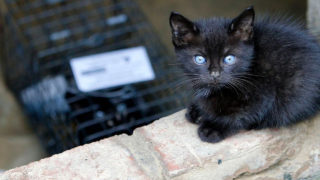
There are cats living outdoors across the nation and around the world—even right in your neighborhood! These community cats are pros at living outside and thrive in their outdoor homes.
Sometimes, like when winter comes and cold weather hits, cats appreciate your help. You can lend a paw, just as millions of others have done, by creating warm outdoor shelters for them.
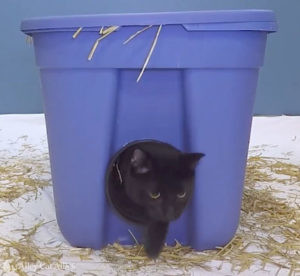
Even though cats are resilient, providing an outdoor cat shelter, where they can sleep, relax, warm up or cool off, and stay safe, can help make life outdoors more comfortable.
Building an outdoor cat shelter is cheap, easy, and your feline friends will love it!
Here’s how to do it:
Watch our Cat Tips: DIY Outdoor Cat Shelter video on YouTube.
What You’ll Need
- A large plastic tub (approximately 30 gallons)
- A small plastic tub (approximately 20 gallons)
- Box cutter
- Straw (NOT hay)
- Permanent marker
- Scissors
- Hair dryer
- Thin slab of Styrofoam
- Plastic flowerpot (Choose a flowerpot that does not taper too much at the bottom, because this will be turned into an entrance later.)
Step-by-Step
-
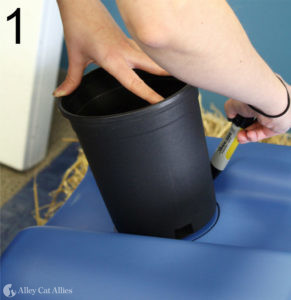
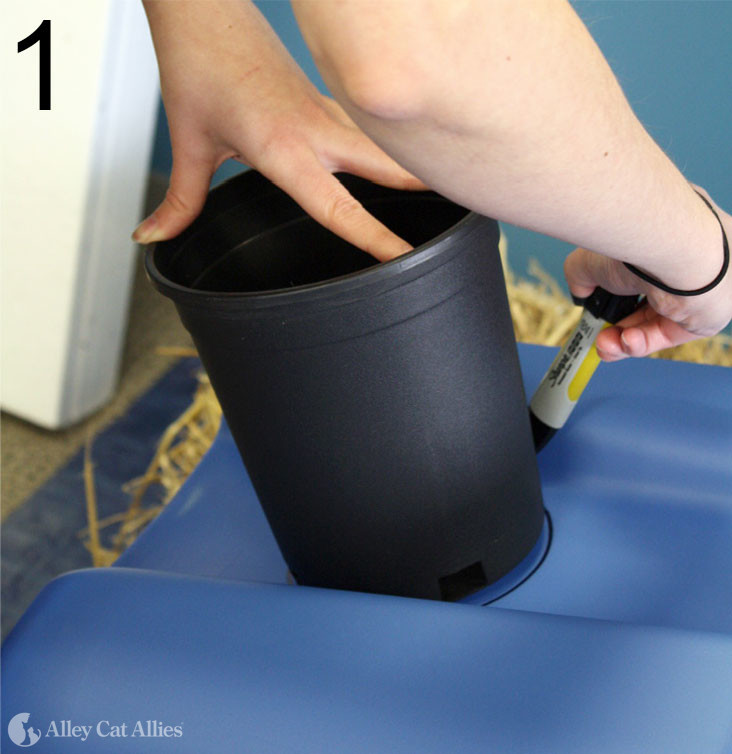
- Place the plastic flowerpot against the side of the large plastic bin, and use the permanent marker to outline the entrance.
-
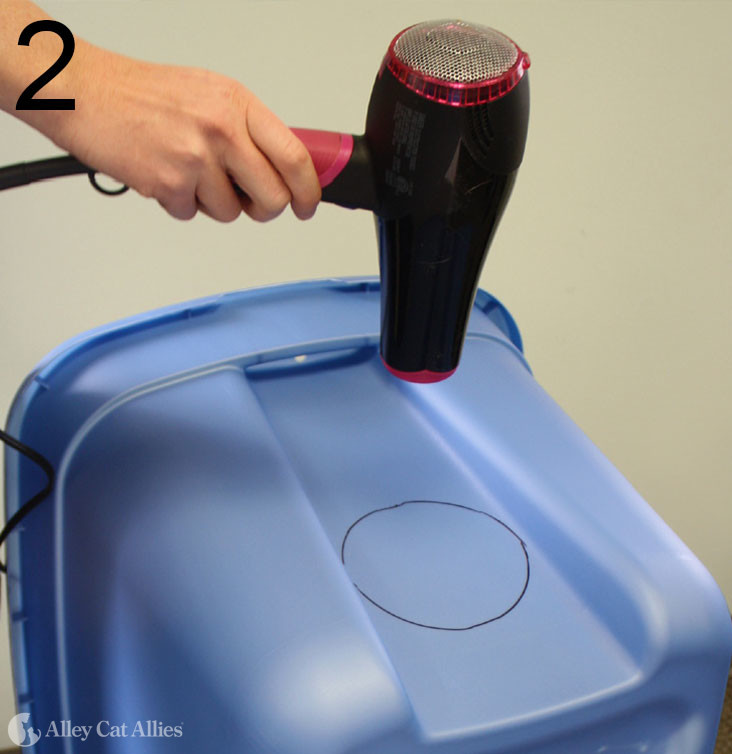
- Soften the plastic outline using the hair dryer. This will make it much easier to cut
-
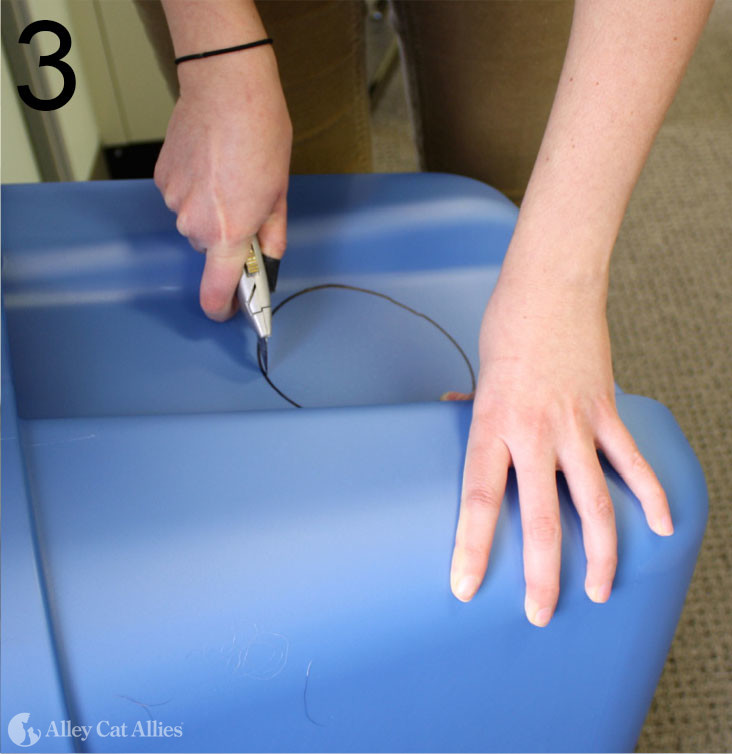
- Use the box cutters to cut out the entrance. Use caution and be careful not to cut yourself!
-
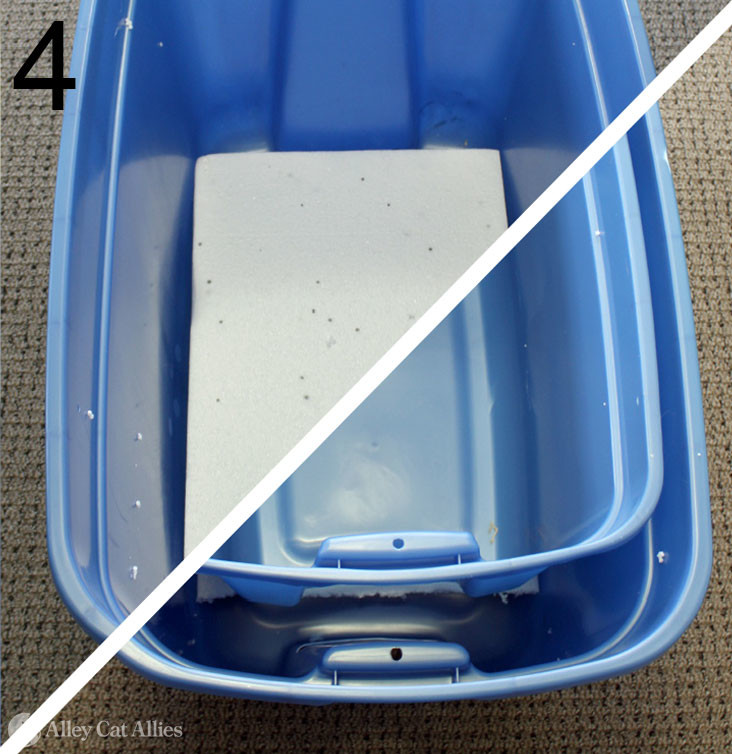
- Place a thin slab of Styrofoam into the bottom of the large tub, then place the small tub into the large tub.
-
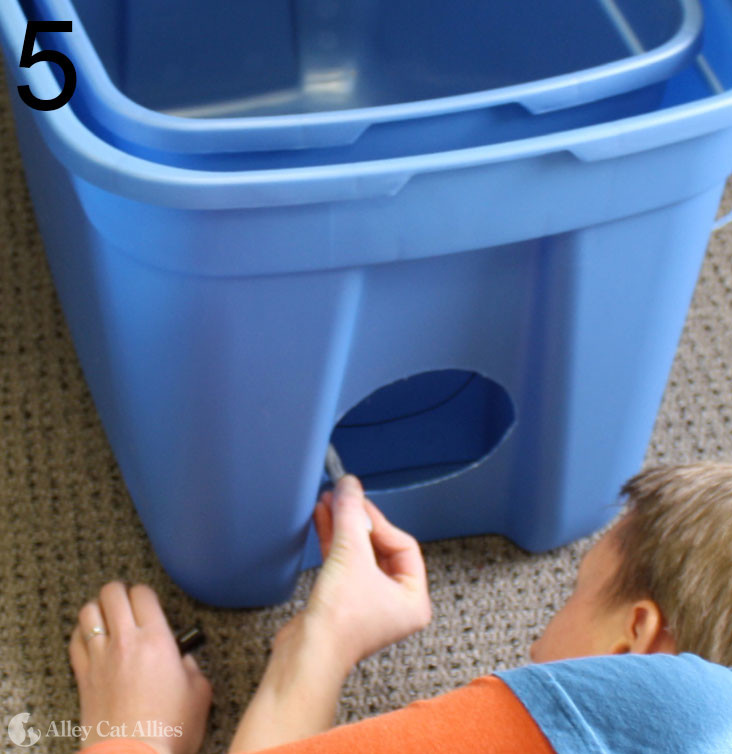
- Align the tubs and use the large entrance as a reference to outline an entrance in the small tub.
-
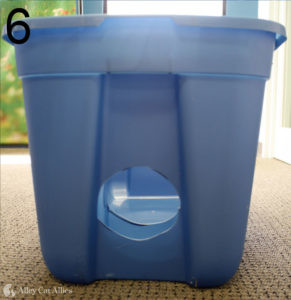
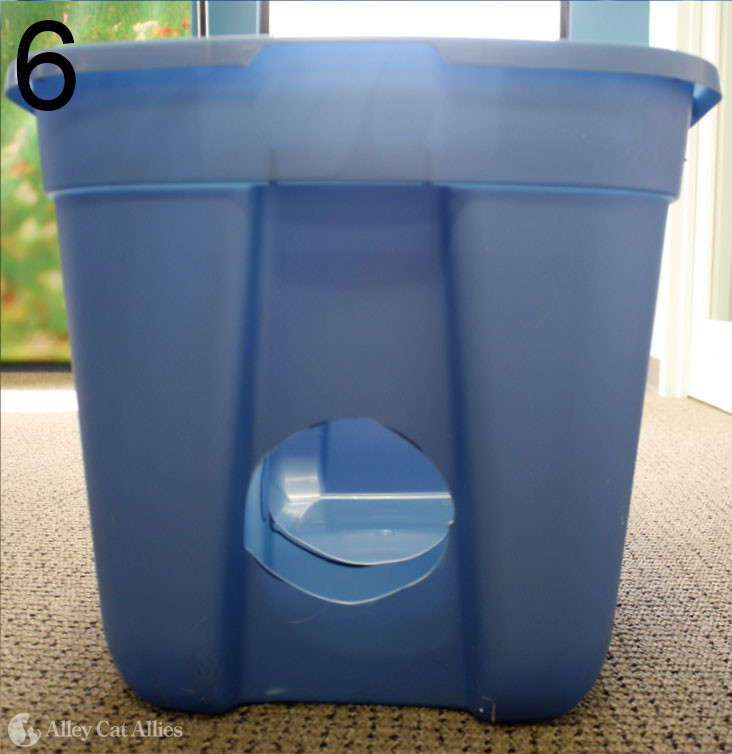
- Repeat steps 2 and 3 for the small tub.
-
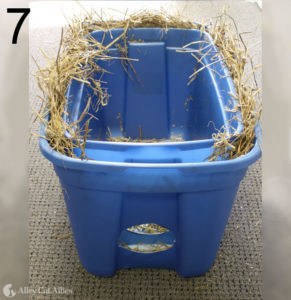
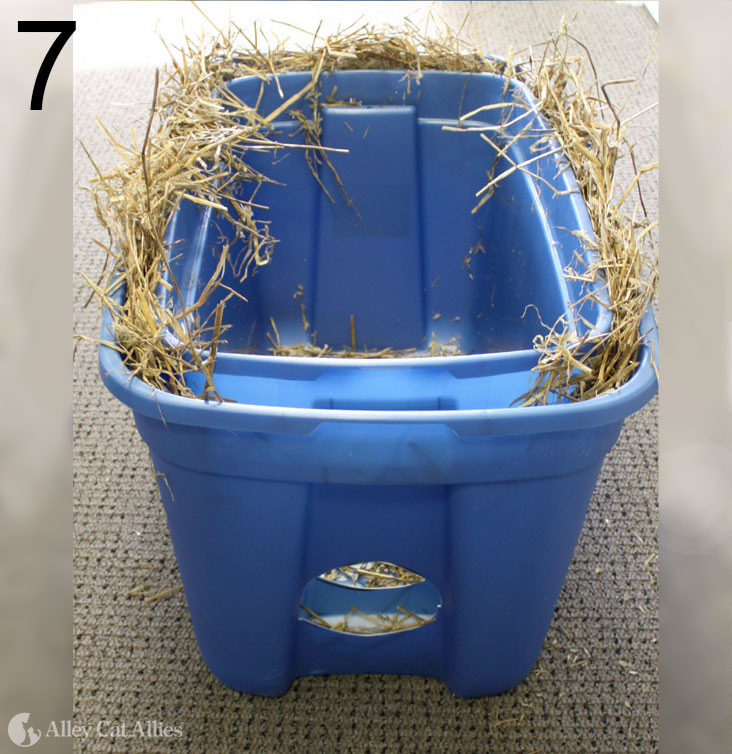
- Place the small tub in the large tub and line the sides between them with straw, which repels moisture. Do not use hayit soaks up moisture and gets moldy.
-
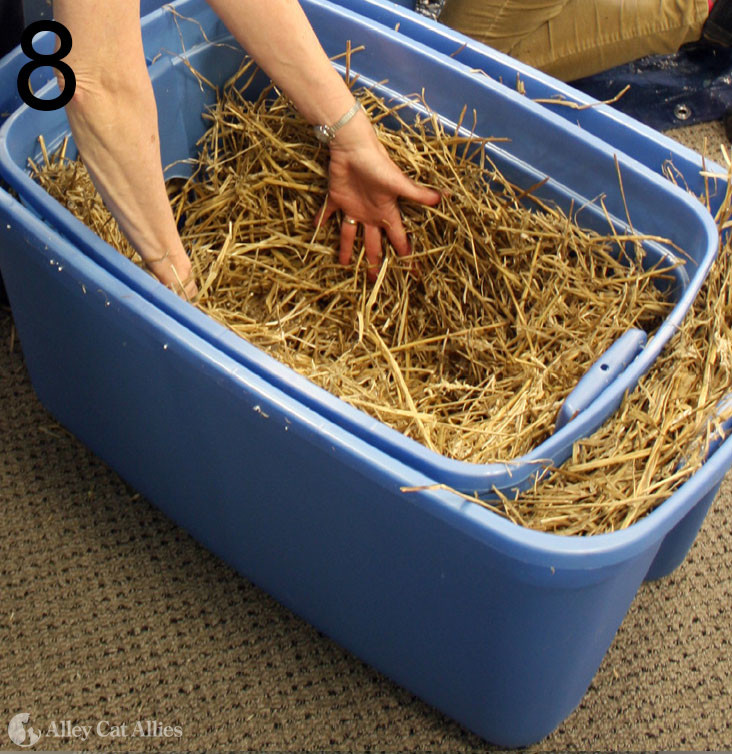
- Fill the small tub with a generous amount of straw. This will be the cats’ bedding.
-
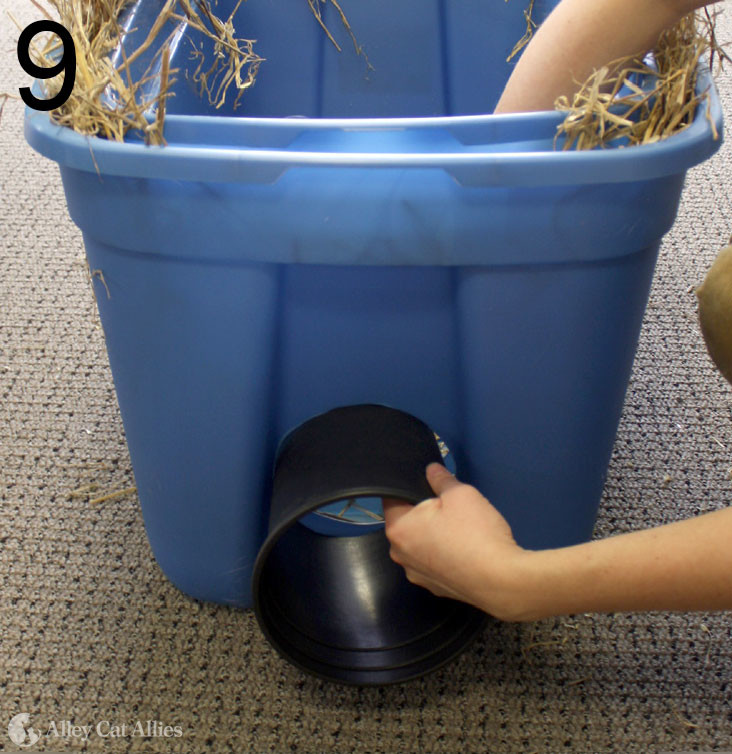
- Use the plastic flowerpot to create a tube entrance. You can do this by simply cutting out the bottom of the flowerpot and sliding it into the large and small tub entrances. You may need to shave off some of the entrances to accommodate the flowerpot.
-
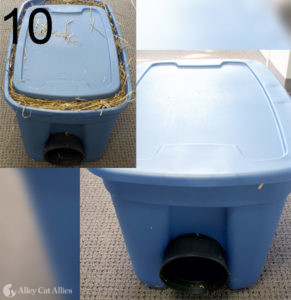
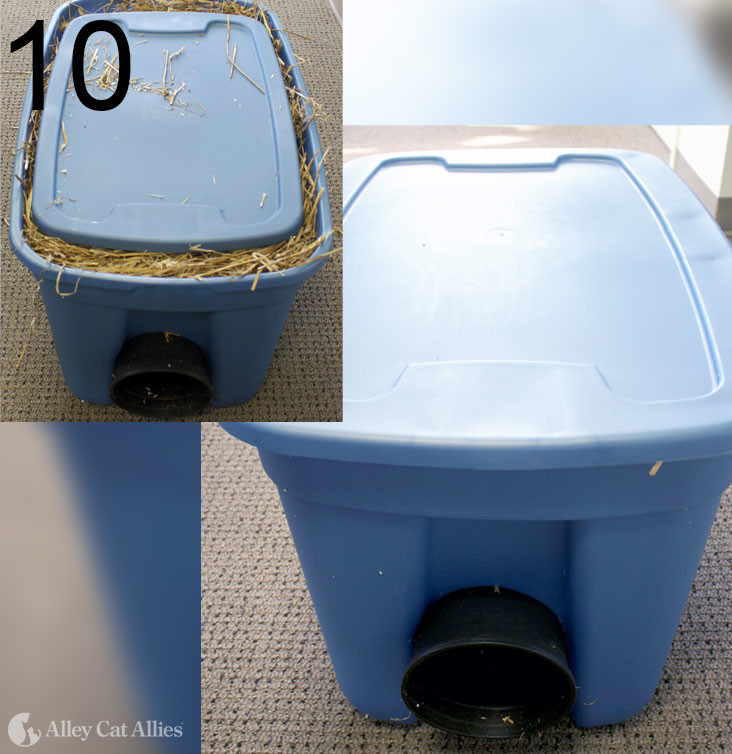
- Put the lids on the tubs and you’re done!
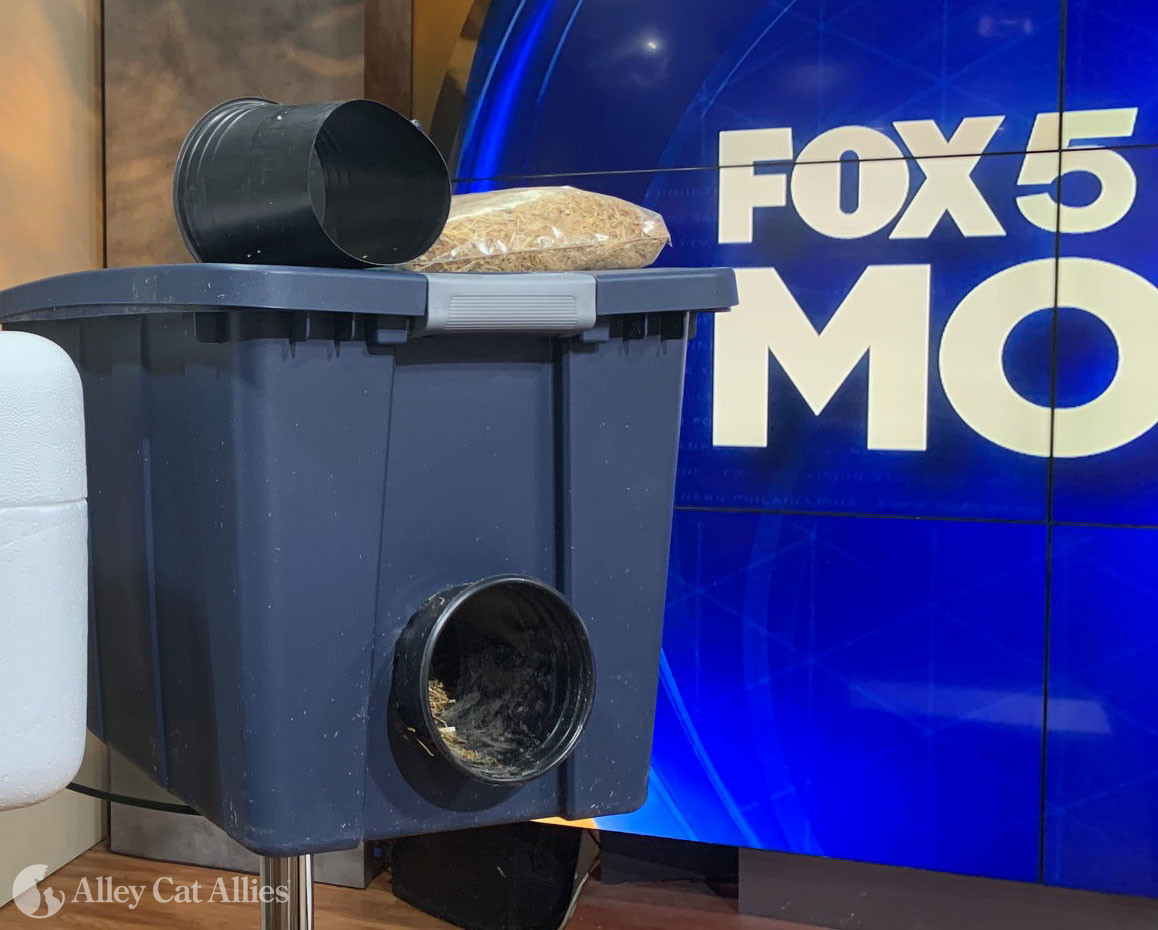
This is just one of the many types of outdoor cat shelters you can provide. See more options for DIY and pre-built outdoor cat shelters at alleycat.org/ShelterGallery.
Founded in 1990, Alley Cat Allies is the leading advocacy organization for cats with a mission to transform and develop communities to protect and improve the lives of all cats and kittens. Together with our over 1.8 million supporters, we work toward a world where cats are valued and every community has humane and effective programs and policies to defend them.
Through our fearless advocacy, humane care, education and outreach, and law and policy activism, we equip and mobilize citizens, advocates, grassroots groups, shelters, veterinary professionals, and elected officials across the United States and around the world to improve their communities for cats through nonlethal, evidence-based approaches.
Our website is www.alleycat.org, and we are active on Facebook, X (Twitter), Instagram, LinkedIn and YouTube. Charlene Pedrolie is the President and Chief Operating Officer of Alley Cat Allies.