

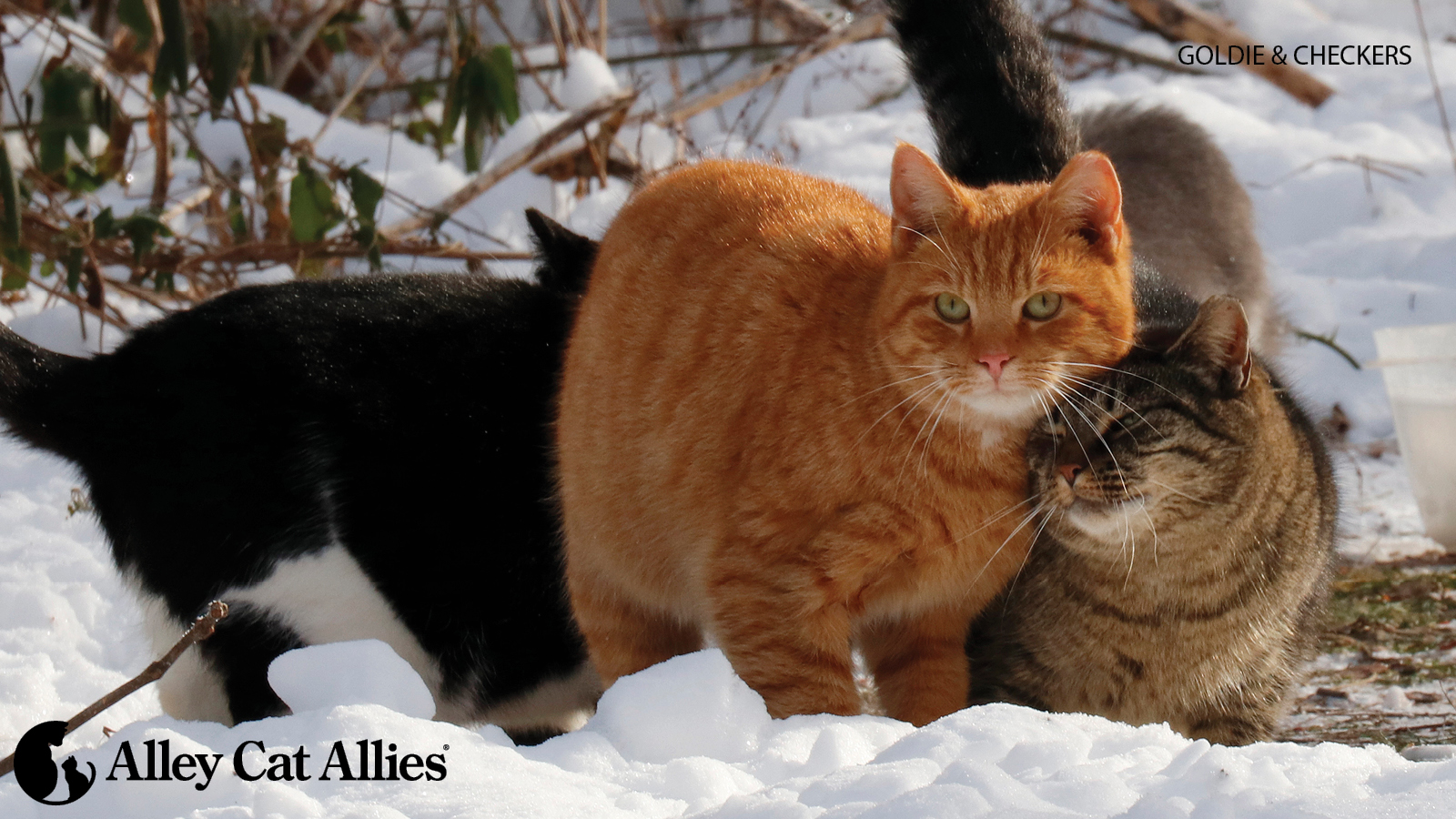
With much of the country facing severe temperature drops and winter weather in the next few days due to an arctic blast, Alley Cat Allies is sharing information to help community cats stay warm and safe outdoors.
Cats have always lived outdoors and thrive in all kinds of locations, weather conditions, and climates. But advocates can still lend them a helping hand during severe weather. Below, find our top expert tips to help community cats through winter storms.
IMPORTANT: Do NOT bring cats or kittens to animal shelters.
Many shelters lack humane, nonlethal policies and programs, so cats—especially community cats who are not socialized to people—are likely to be killed.
Alley Cat Allies’ Top 8 Severe Winter Weather Tips for Cats:
1. Provide outdoor shelters for community cats
Whether you want to build or buy a shelter, we have shelter ideas, blueprints, and suggestions to help.
2. Insulate outdoor cat shelters with STRAW, not HAY
Straw repels moisture, so the shelter stays warm and dry, while hay and blankets absorb moisture, leaving the shelter wet and cold. Cats can burrow into the straw to stay even warmer.
You can also try lining shelters with mylar blankets; those distinct silver blankets that reflect radiant heat. However, because cats dislike the sound and feeling of crinkling, the blanket must be covered with a thick layer of straw.
Elevate the shelter off the ground (placing a wooden pallet beneath is a great option), set it in an area that has some coverage and is out of the worst of the elements, and face the entry away from any wind. If you’re expecting a strong winter storm, weigh down the shelters with bricks or other heavy items so they don’t blow away. Find more community cat outdoor shelter tips.
3. Use food and water dishes that will prevent freezing
A heated bowl will prevent cats’ water and wet food from freezing. You can also use ceramic or plastic bowls that are deep rather than wide and place them in a sunny spot during the daytime.
When possible and safe, check the cats’ water to ensure they always have an unfrozen source.
4. Build a feeding station to keep food insulated
A feeding station that keeps bowls insulated and off the ground will also go a long way. We have some feeding station options you can consider.
5. Provide extra food and keep the water flowing
Continue to change out food and water rather than letting leftovers freeze. A critical tip: increase your typical meal portions for the cats while the severe cold continues. Staying warm burns a lot of energy, so the extra calories are important.
Canned or wet food takes the least amount of energy to digest versus dry food, meaning more energy can be spent staying warm.
6. Prepare cats’ outdoor homes for snowstorms
If a major snow accumulation is in the forecast, give cats extra food and water in case you can’t get to them for a couple of days. As often as possible, clear snow from the entrances of cats’ shelters so they don’t get snowed in.
7. Don’t use salt, chemical melting products, or antifreeze
These products can be lethal when licked off paws or ingested from melting puddles. Antifreeze in particular can be attractive to cats and is extremely toxic.
Keep antifreeze out of reach and clean up spills. Most antifreeze brands use ethylene glycol as the main ingredient, so be sure to switch to a brand made with propylene glycol because it is less toxic.
Animal?friendly deicer alternatives to salt and chemicals are available at most pet stores.
8. Always check under the hood of your car for cats
Sometimes, cats will sleep under cars or even crawl into them to curl up near a warm engine. Before you turn on your car, look under it to make sure the coast is clear, and then pop the hood to make sure a cat isn’t resting there.